
Articles & Blogs

The challenges and opportunities of launching an Indigenous-led land trust in northern Ontario — and how CLC’s Ivey leadership program helped
By Elena McCulloch
If you’re driving north on Highway 11 toward Timmins, you’ll eventually pass a sign on the side of the road telling you that you’ve reached Ontario’s “height of land.” Here, two watersheds diverge. To the north, the waters flow to James Bay, Hudson Bay and the Arctic, while to the south, they flow to the Great Lakes and the Atlantic.
This natural boundary delineates the territory where I work as the Manager of Land Stewardship for Wahkohtowin Development: a social enterprise owned by Missanabie Cree First Nation, Brunswick House First Nation and my own band, Chapleau Cree First Nation.
There’s a lot of interest in our communities for more protection of lands and waters from mining and forestry. And for the last few years, we’ve been working to achieve the mandate issued by our Chiefs to pursue conservation of 30 per cent of the land and freshwater across their shared territories by 2030, in line with Canada’s federal biodiversity target.
In 2024, we received funding through Parks Canada’s National Program for Ecological Corridors to help achieve those goals. We did a series of in-person and online engagement sessions to identify and map community conservation priorities, which led to the development of a conservation vision for our Owner Nations’ shared territories: the Height of Land Ecological Corridor (HLEC). This funding also allowed us to acquire private land within the HLEC for the creation of Indigenous-owned and stewarded conservation areas.
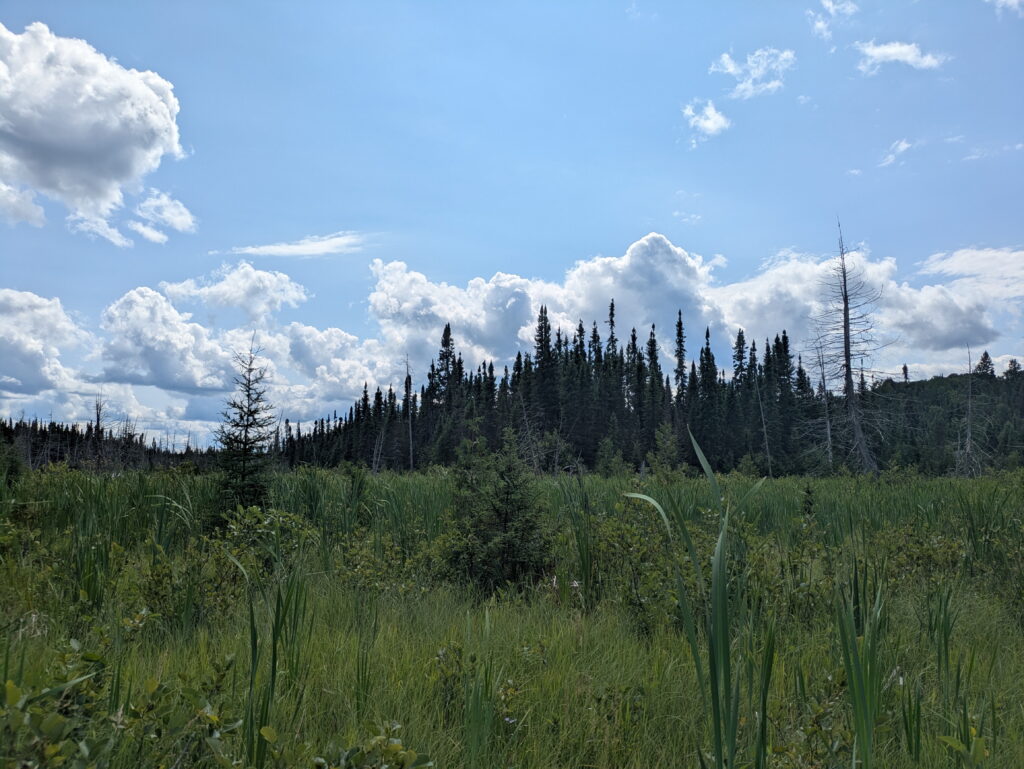
In early 2026, we established the Wahkohtowin Askiy Land Trust and purchased our first property. It’s 237 hectares of wetlands and dense forests about a 10-minute drive east of Chapleau, with access to Borden Lake.
A different approach to conservation
Our work as a land trust goes beyond safeguarding these natural spaces from industrial practices like logging. It’s also about creating more opportunities for our communities to be on the land and water.
Enabling those relationships is crucial. While the mission of many non-Indigenous land trusts includes fostering connections with nature, for Indigenous land trusts it’s a responsibility. It’s not a second-tier consideration. In our philosophy, everything is connected. People are a part of that web of life and part of a healthy environment that includes a reciprocal give-and-take with the land.
Last year, I heard one of our Chiefs tell provincial government officials that she’s afraid to build a relationship with any particular part of the forest because she might go back one day to find that it’s been cut down. Wahkohtowin Askiy Trust will give our communities access to land and control over what actions are taken on these properties, so they don’t need to worry it will one day be clear-cut or sprayed with herbicide.
Growing our conservation capacity
Right now, we’re working on getting our charitable status, which will allow us to fundraise and accept land donations in the years ahead.
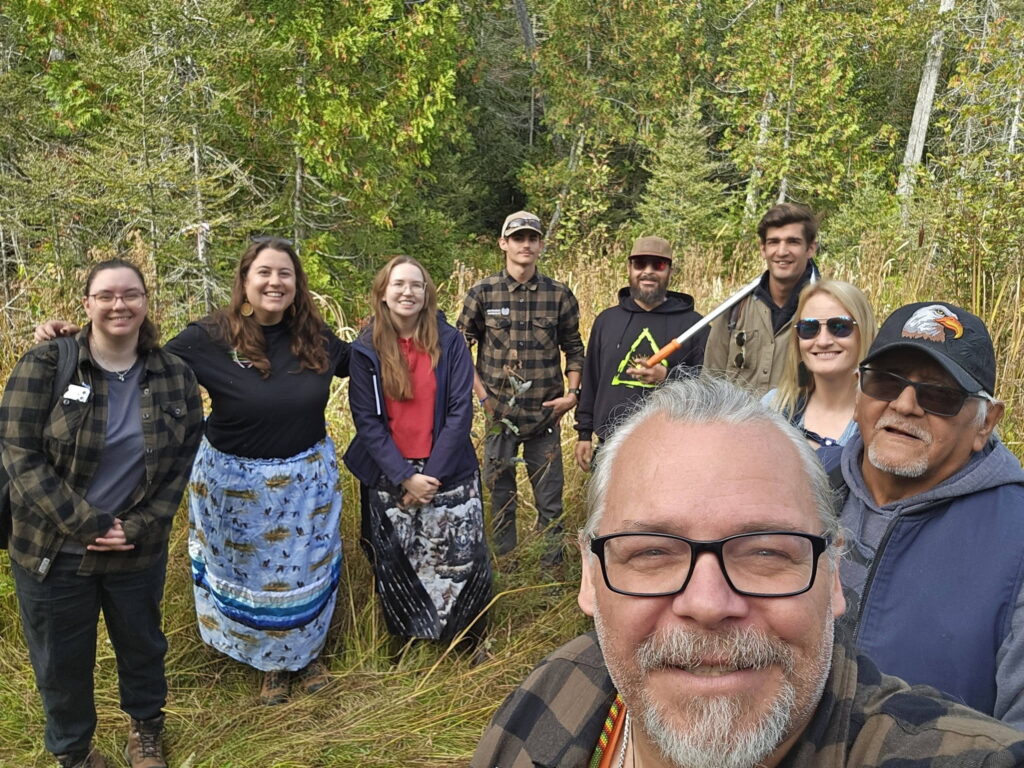
At the same time, we’re working with the community to develop a stewardship plan for the property we’ve acquired to guide how we care for that land and enable community relationships with it. And to guide that process, we’ve established an official advisory committee of community members called the Protection Circle.
As someone who’s very new to the land trust world, I’ve also been focused on building my own capacity. That included being part of the Ivey Conservation Leadership Program — a five-day training program developed by the Ivey Business School and the Centre for Land Conservation — back in April.
It was a big confidence booster. My fellow cohort members were very supportive and encouraging, and I got a lot of really good feedback. I came out of that week with a much better idea of what my strengths are as a conservation professional and as a leader.
Sign up here to be apart of the next Conservation Leadership Program: https://www.ivey.uwo.ca/executive-education/programs/individuals/canadian-conservation-leadership-program/
A movement towards Indigenous-led conservation
I saw a lot of concern around respecting Indigenous rights among my Ivey cohort. That’s really encouraging. And we’ve seen that in the broader land trust community as well.
We’ve received a lot of support from the Ontario Conservation Accelerator, who connected us with the landowner that we bought our first property from. They’re also a great resource for figuring out the legal side of things, the process for obtaining charitable status and other operational issues.
Meanwhile, it’s really exciting and inspiring to see more First Nations setting up Indigenous Protected and Conserved Areas, like Garden River First Nation, through different creative tenure agreements, like partnering with an existing non-Indigenous land trust.
I’m looking forward to building deeper relationships with other organizations and Nations doing this work and learning from them.
Putting the “trust” in land trust
These Indigenous-led efforts are crucial. It can be difficult for outside organizations to know where to start when it comes to building relationships with Indigenous communities in the areas where they’re working.
And for many First Nations — including the Nations that I work for — there’s a negative history with conservation. A prime example here in northern Ontario is the Chapleau Crown Game Preserve, the largest of its kind in the world.
When the provincial government created it one hundred years ago, it displaced the Indigenous people who were hunting and living there, cutting them off from important cultural and historic sites. It’s only in the last couple of decades that community members have been able to harvest in these traditional areas without being prosecuted.
In order to avoid repeating or continuing these injustices, communities and Nations who have generations and generations of experience and relationship with the land, and rights and responsibilities associated with these relationships, must be understood to be the ultimate decision-makers for conservation initiatives on their territories.
I’m looking forward to the next steps for Wahkohtowin Askiy Trust. And I’m hopeful that there will be more opportunities for funding and capacity building for Indigenous-led efforts like ours.
Join our mailing list for updates and information on upcoming events and publications.
