
Articles & Blogs


Canada’s land trust leaders have daunting job descriptions. Steward hundreds or thousands of hectares of land in perpetuity. Run their organization on a shoestring budget. Raise money. Negotiate land agreements. Manage staff and volunteers. All in a high-stakes mission to fight biodiversity loss and preserve ecosystems under threat.
While many of them bring stellar backgrounds in biology or environmental science, most lack any formal leadership training.
The Conservation Leadership Program aims to fill that void. The initiative was co-created by the Centre for Land Conservation (CLC) and the Ivey School of Business at Ontario’s Western University, with support from Metcalf Foundation and the Chisholm Thomson Family Foundation.
The five-day program doesn’t provide cookie-cutter executive training. Instead, it was specifically designed to empower senior land trust leaders with the business skills, approaches, tools and networks to deliver system-wide change.
“By working with Ivey, we’re bringing proven leadership development into the land conservation sector,” says CLC Executive Director Lara Ellis. “These leaders already have the passion and knowledge. Now this program helps them amplify their impact.”
Cultivating confident, effective change-makers
In October 2025, the program welcomed its inaugural cohort of 24 participants, representing land conservation organizations large and small from across the country.
Together, they explored different dimensions of leadership through case studies, hands-on exercises and coaching-style facilitation. Led by Ivey faculty and conservation experts, they sharpened their strategic thinking, strengthened negotiation and collaboration skills and developed the entrepreneurial mindset required to scale up the impact of land conservation across Canada.
“I feel like finally I have some formal training in the things that are expected of me as an executive director,” says Calder Schweitzer, who has headed up Ontario’s Thousand Islands Watershed Land Trust for the past six years.
For newcomers to the world of land trusts, it offered a deep dive into the sector. “There were so many aspects of it that were extremely rich and phenomenal learning opportunities,” says Amy Kamarainen, who had been appointed executive director of B.C.’s Mayne Island Conservancy just a few months prior to arriving at Ivey.
But the program proved just as valuable for seasoned leaders like Jasper Lament, who has served as CEO of the Nature Trust of British Columbia — the province’s biggest regional land trust — since 2012.
“I think really all land trusts that are on a growth trajectory or want to be on a growth trajectory can benefit,” he says. “It’s a unique opportunity for land trust leaders to learn from some of the best business school instructors in Canada and bring those lessons back to their organizations.”
His classmates agree, giving the program an overall rating of 6.9 out of 7.
Strengthening networks and enhancing capacity
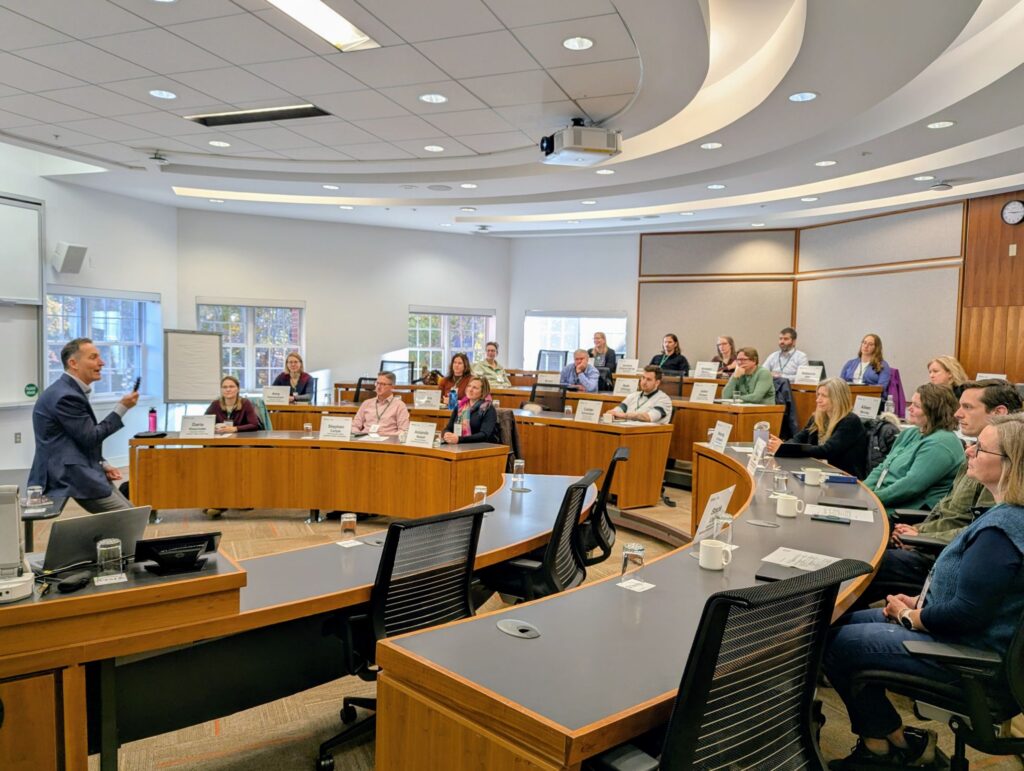
Highlights included simulated negotiations, hands-on sales exercises and a session on Two-Eyed Seeing approaches that braid together Indigenous and Western teachings. “That’s something that all of us in the sector have to build our skills and understanding about,” says Lament.
Perhaps the greatest benefit was connecting with peers across Canada who understand the pressures and complexities of the work and are navigating many of the same challenges. By providing space to build strong personal relationships, the program has created a network of leaders who feel comfortable asking each other questions, sharing knowledge and comparing notes.
“It no longer feels like I’m the [only] one working on this,” says Schweitzer. “There are tons and tons of people working on what I see is the big problem of our time, and that really inspires a lot of hope. It re-energizes me for the work.”
According to Kamarainen, coming together also revealed opportunities to work together and take conservation to a new level. “We see those leverage points in the system that can help us really push for change,” she says. “I think it could lead to some really amazing things.”
An investment that pays dividends
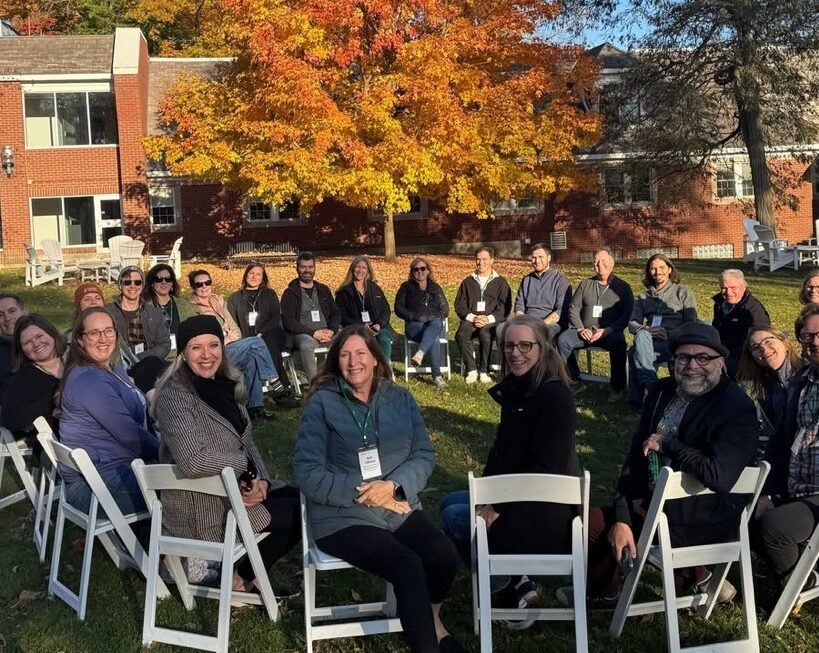
Stepping away for a full week represents a significant commitment of both time and money. However, substantial subsidies helped make the program accessible, thanks to generous funding from the Metcalf Foundation and the Chisholm Thomson Family Foundation.
Lament sees big value in having the space to focus on bigger-picture issues that shape long-term organizational success. “I think that’s an investment that will pay dividends for land trusts across Canada,” he says.
It comes at a pivotal time. In the face of climate change and biodiversity loss — and in the midst of growing geopolitical and economic uncertainty — conservation professionals need the tools to overcome obstacles, drive change and achieve lasting results.
“The future of Canada’s lands depends on the people leading their protection,” says Ellis. “I think that any leader that has the opportunity to do the course should jump in with both feet.”
Join our mailing list for updates and information on upcoming events and publications.
